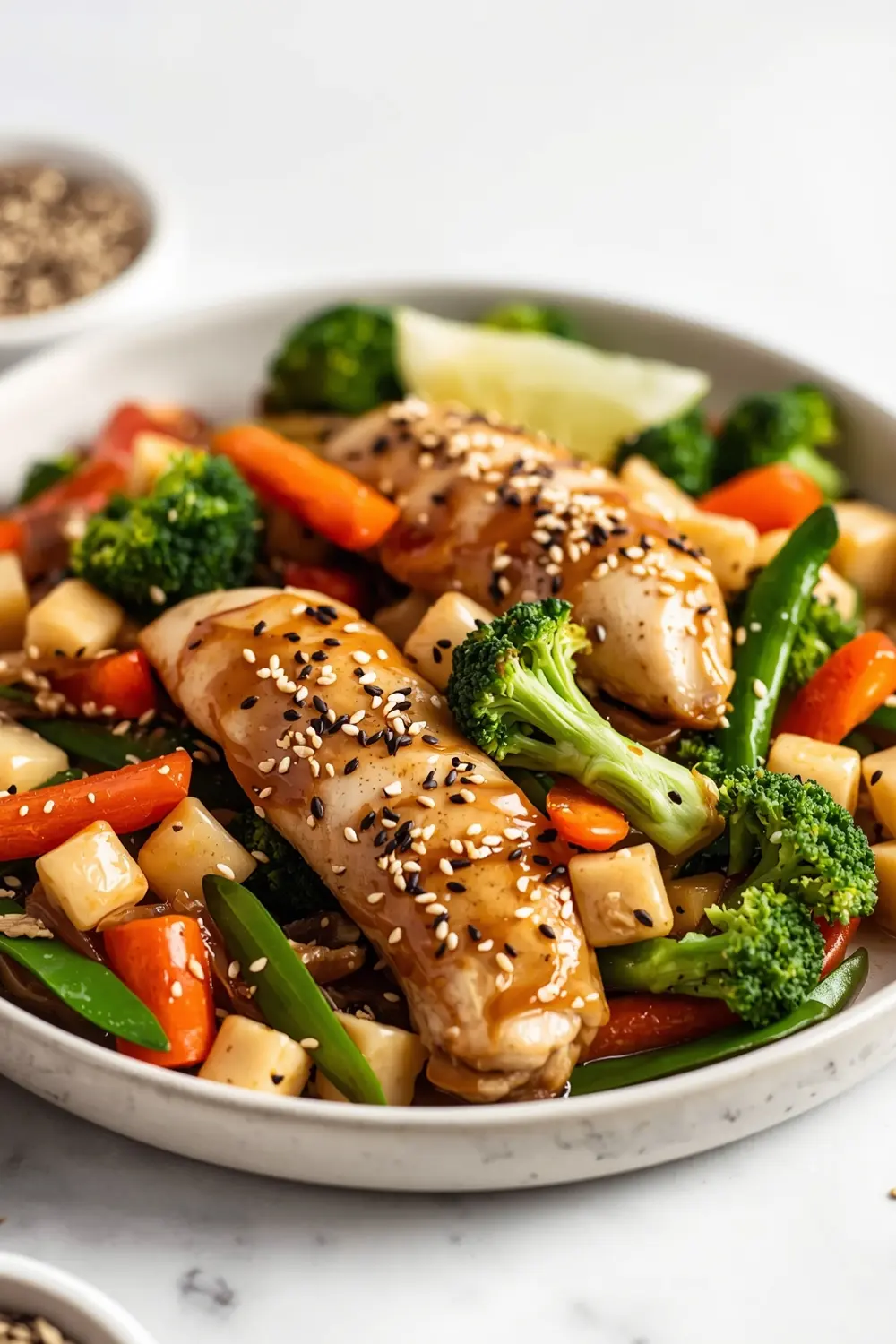
Pat the chicken strips completely dry with paper towels—moisture is the enemy of browning, and I've wasted more dinner nights ignoring this step than any other mistake. Wet chicken steams instead of searing, which means flavorless meat and a sauce that never coats properly. Dry chicken is the difference between this tasting like home cooking and tasting like actual restaurant food.
Heat the vegetable oil in a large wok or skillet over high heat for 2-3 minutes until it shimmers and barely smokes. This is the moment where confidence matters most because turning back to medium heat ruins everything you're about to do. I used to babysit the oil because I was nervous, but now I know that high heat is exactly what creates that char on the chicken that Connor asks me to make again tomorrow.
Working in two batches to avoid crowding the pan, sear the chicken strips for 3-4 minutes per side until golden and cooked through, then transfer to a plate. Don't stir constantly—let each side get actual contact with the hot pan so the surface gets color instead of staying pale. The first batch always feels like it's taking forever, but then batch two goes faster and you realize what you're waiting for is worth it.
Reduce heat to medium-high and add the remaining olive oil with the sliced onion. Cook for 2 minutes until the onion starts turning translucent, then add the garlic and ginger and cook for another 60 seconds until fragrant. This step is where your kitchen starts smelling like the good part of a real restaurant, the part that makes people actually want to eat there.
Add all the vegetables—broccoli, carrots, bell pepper, and snap peas—and cook for 5-6 minutes, stirring occasionally, until they're tender but still have some bite. They should be bright and individually visible, not collapsed into each other. Vegetables that still have texture make kids actually willing to eat them, which is the whole point of learning to cook them right.
In a small bowl, whisk together the soy sauce, honey, rice vinegar, sesame oil, and the cornstarch-water mixture until smooth. Pour this sauce over the vegetables and cooked chicken, then toss everything together constantly for 90 seconds until the sauce thickens and coats every piece. This is the final step where the magic happens—you'll see it go from liquid to glossy, and that's when you know it's exactly right.
Squeeze fresh lime juice over the top and sprinkle with toasted sesame seeds and black pepper. Taste it before serving because this is where you adjust salt if needed—the soy sauce varies by brand, so you might need a pinch more or you might not. Serve immediately over rice or noodles while everything is still steaming and the vegetables have just enough firmness left.