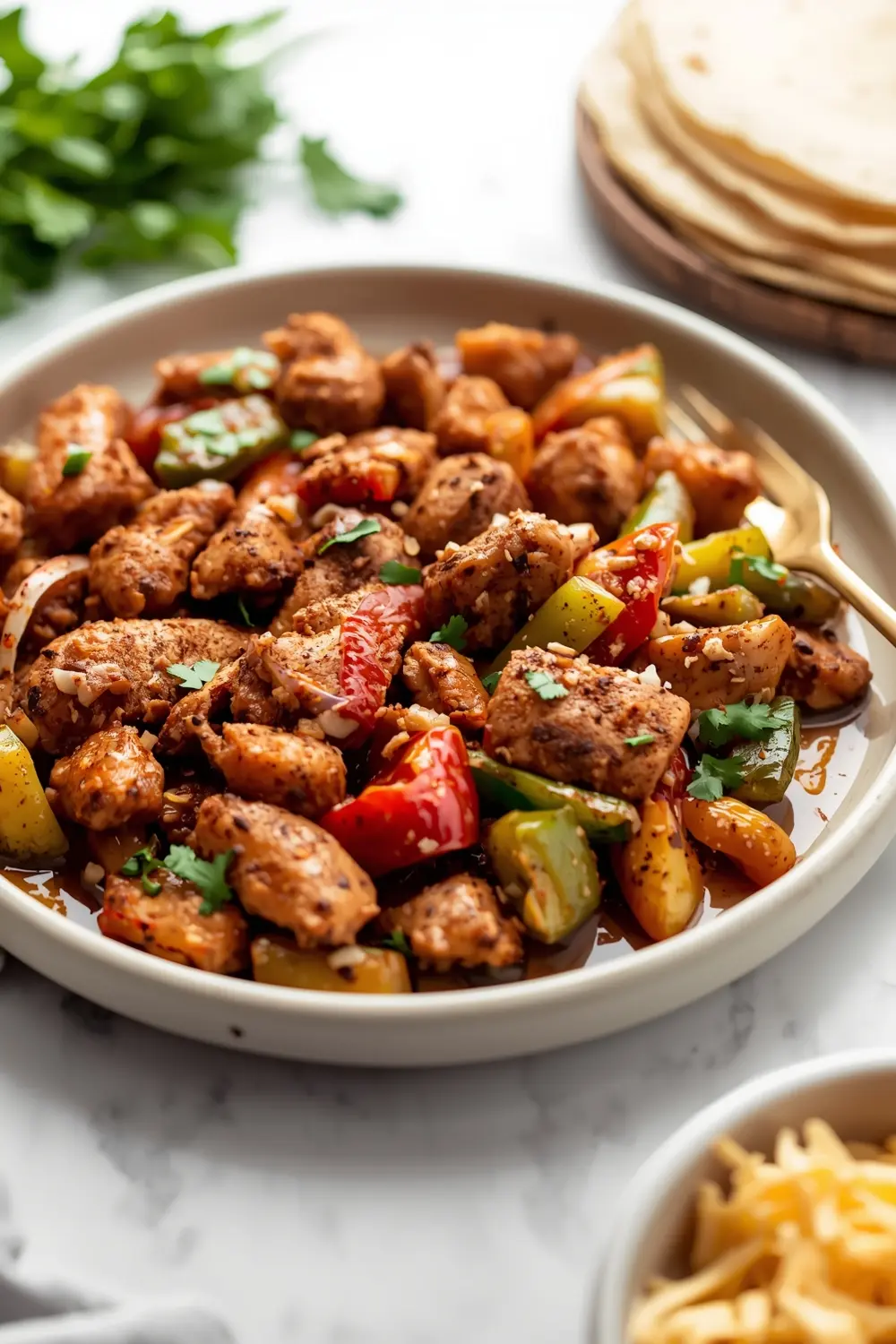
Pat your chicken strips completely dry with paper towels—this is non-negotiable for browning. Moisture is the enemy of caramelization, so I spend the extra thirty seconds here because it prevents the meat from steaming instead of searing.
Heat olive oil in a large skillet over medium-high heat until it shimmers and just barely starts smoking. This takes about two minutes, and I know it's ready when I can wave my hand above it and feel intense heat radiating.
Add your spice blend to the dry pan for exactly 30 seconds, stirring constantly with a wooden spoon. You'll smell it transform from raw to toasted—that's your signal to add the chicken immediately, before the spices burn.
Add chicken strips in a single layer and resist the urge to touch them for 4 to 5 minutes. I confess I used to flip constantly out of nervousness, but patience builds that golden crust that separates good fajitas from great ones.
Flip each piece and cook another 3 to 4 minutes until the internal temperature reaches 165°F. Use a meat thermometer if you have one—I do, because undercooked chicken ruins everything you've built up until this point.
Push the cooked chicken to the pan's edges and add your sliced peppers and onions to the center. The residual heat and fond at the bottom will start flavoring the vegetables immediately, and this layered approach keeps the chicken warm without overcooking it.
Stir everything together and cook for 6 to 8 minutes until the peppers have soft edges with charred spots. The vegetables should be tender enough to bite easily but still hold their shape—not collapsed into a sad pile.
Taste and adjust seasoning with additional salt or cumin if needed, then transfer your one pan chicken fajitas family summer skillet directly to the table for family-style serving.