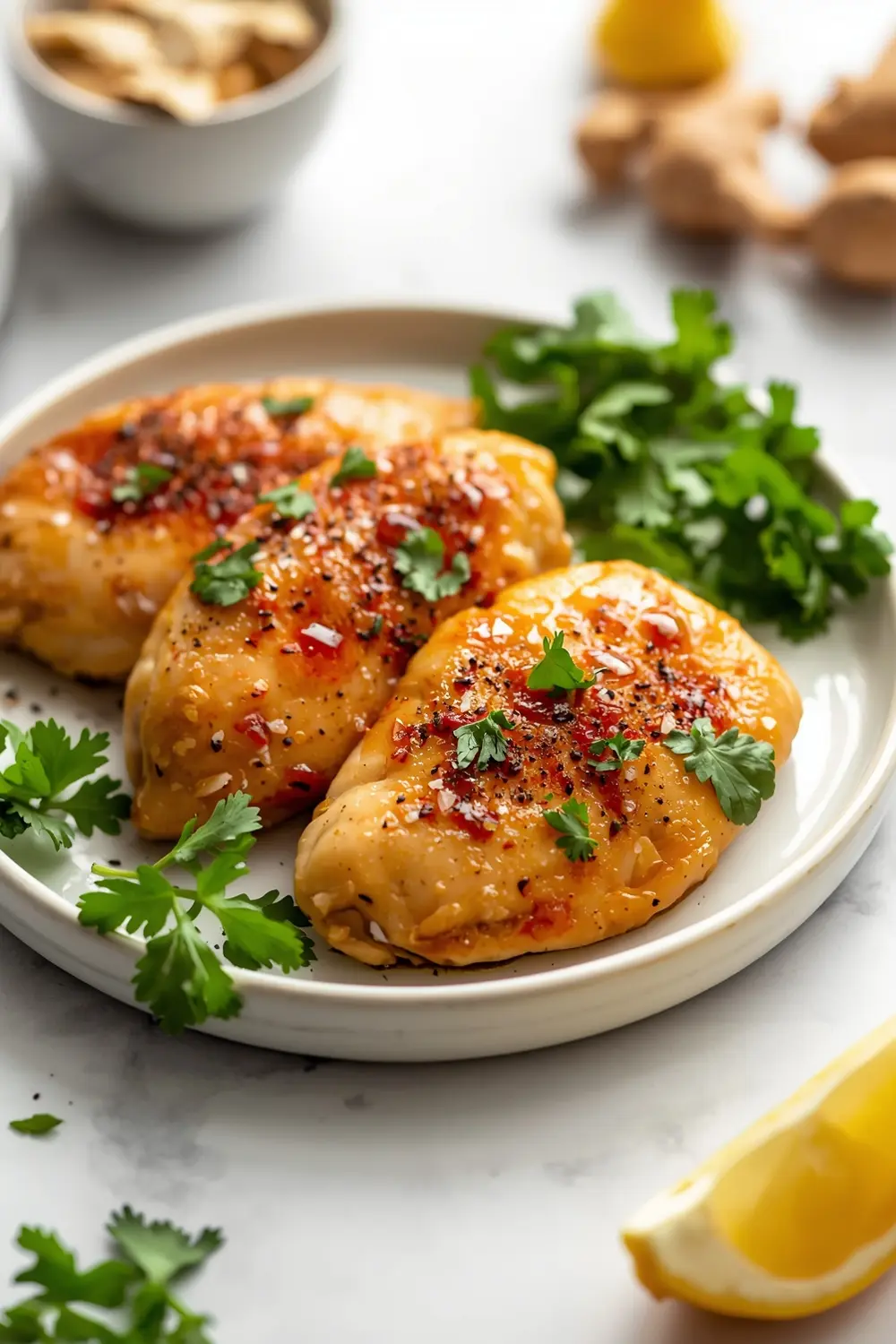
Combine olive oil, lemon juice, minced garlic, grated ginger, honey, sea salt, and pepper in a bowl large enough to hold all your thighs. Whisk everything together for about 60 seconds until the honey dissolves—I learned the hard way that lumpy honey gets stuck to the chicken and never quite marinates evenly.
Add smoked paprika, ground cumin, mustard powder, cilantro, and parsley to the bowl. Stir everything together for another 30 seconds because these dried spices need to distribute throughout the oil before the chicken touches it.
Pat your chicken thighs completely dry with paper towels, then arrange them skin-side up in a large zip-lock bag or shallow baking dish. This is the part where people rush, but dry chicken absorbs marinade way better than wet chicken does—honestly, it makes a visible difference in how the flavors penetrate.
Pour the grilled chicken thigh marinade family recipe mixture over the chicken, making sure each thigh gets coated on both sides. Use your hands to rub some marinade under the skin where the magic happens—this is where the ginger and paprika actually become part of the meat instead of just sitting on top.
Cover and refrigerate for at least 4 hours, ideally overnight if you're planning ahead. I usually prepare this while making coffee on Sunday morning, then I've got dinner basically handled by Tuesday because the work is already done.
Remove chicken from the refrigerator 30 minutes before grilling so it reaches closer to room temperature. This matters because 5 ingredient BBQ chicken cooks more evenly when it's not ice-cold in the center, preventing that problem where the outside burns while the inside stays undercooked.
Preheat your grill to medium-high heat, then brush the grates with oil to prevent sticking. Place chicken skin-side down on the grill for 8 to 10 minutes until the skin darkens and releases easily from the grates—this happens naturally and tells you when to flip, not some timer on your phone.
Flip the chicken and cook for another 12 to 15 minutes on the bone side until a meat thermometer inserted into the thickest part reads 165°F. When it hits that temperature, Connor actually eats this without negotiating, which is my real metric for success.