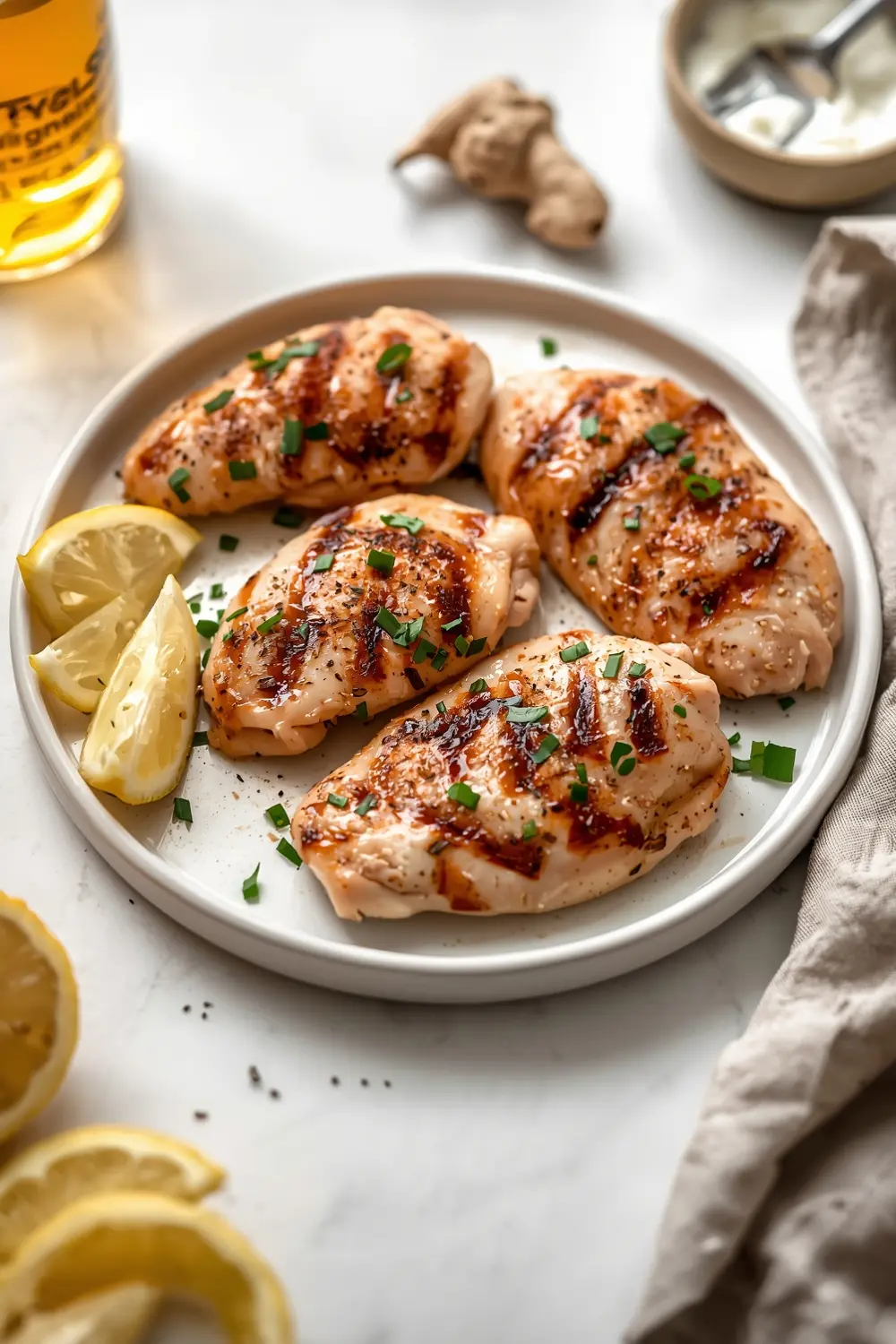
Combine olive oil, lemon juice, soy sauce, honey, minced garlic, ginger, salt, pepper, oregano, thyme, and smoked paprika in a medium bowl. Whisk for two minutes until the honey fully dissolves—this prevents that gritty texture that happens when honey clumps in your marinade.
Fold the yogurt in gently using a rubber spatula rather than whisking aggressively; you want a smooth consistency without incorporating unnecessary air. I learned this backwards once by whisking too hard and ending up with oddly separated yogurt, which tasted fine but looked concerning.
Place six chicken breasts in a gallon-size ziplock bag or large glass container, then pour the grilled chicken marinade family recipe mixture over completely. Press out any excess air if using the bag method, which prevents oxidation—this matters because exposed chicken surfaces oxidize faster and can develop off-flavors.
Refrigerate for at least four hours, or up to 12 hours maximum for the best flavor development and tenderizing action. Beyond 12 hours, the yogurt's acids start breaking down the chicken proteins too aggressively, resulting in mushy texture—I'm speaking from experience here, literally leaving chicken overnight and regretting it entirely.
Remove chicken from refrigeration 20 minutes before grilling so it reaches closer to room temperature, which means more even cooking through the thickest parts. Cold chicken straight from the fridge browns unevenly because the exterior cooks faster than the interior reaches safe temperature.
Preheat your grill to medium-high heat, around 400°F, then brush grates clean with a grill brush to prevent sticking. Pat chicken dry with paper towels before placing on the grate—this step determines whether you get that gorgeous caramelization or sad steaming.
Grill chicken for 6-7 minutes per side, or until internal temperature reaches 165°F at the thickest point measured with an instant-read thermometer. Don't flip constantly; resist that urge even though it feels like it needs attention because constant flipping prevents the Maillard reaction that creates flavor.
Let chicken rest for five minutes on a cutting board before cutting or serving, which redistributes juices throughout the meat instead of letting them run onto your plate. This single step determines whether Lily actually wants seconds or politely declines.