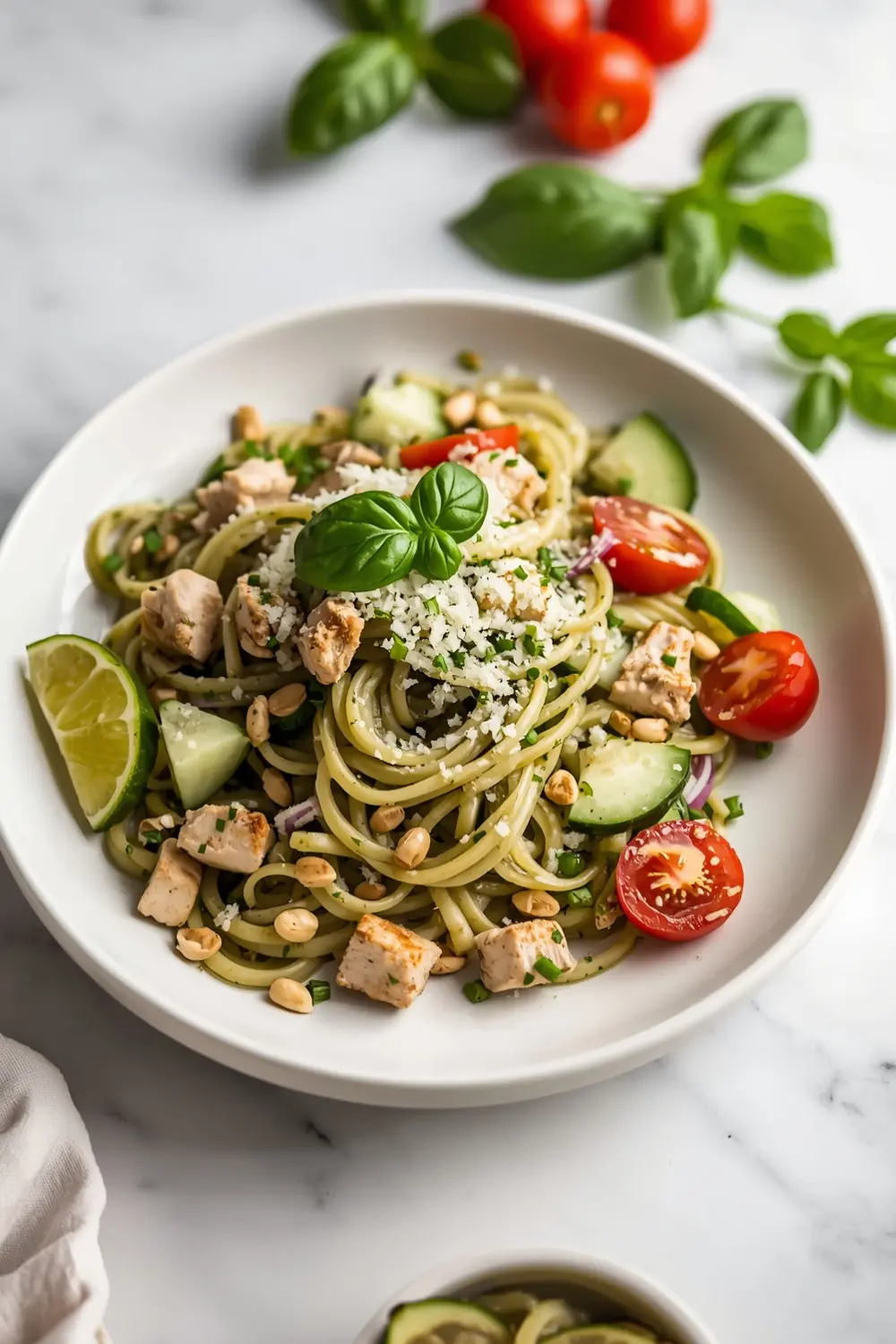
Bring a large pot of salted water to a rolling boil, then add the 12 oz of short pasta. I always taste at the 8-minute mark because pasta continues cooking slightly as it cools, and nobody wants mushy texture in their cold pesto pasta family summer recipe. Stir occasionally so nothing sticks to the bottom.
While pasta cooks, combine fresh basil, toasted pine nuts, peeled garlic cloves, and 1/2 cup extra-virgin olive oil in a food processor. Pulse until you see small flecks of basil but the mixture still has texture—this takes about 15 seconds. The why: over-processing creates a watery paste instead of the chunky pesto that coats pasta properly.
Add 1/2 cup lemon juice and 1/2 cup Parmesan cheese to the food processor, pulsing just until combined. I confess I've made this pesto too thick before and it's impossible to distribute, so aim for a consistency that pours slightly slower than olive oil. Stop processing the moment you see everything mixed through.
Drain the cooked pasta into a colander and rinse briefly under cool running water—not ice water, which stops cooking too abruptly and makes noodles stick together. Pour the pasta into a large mixing bowl and let it sit for 3-4 minutes before adding pesto. This resting period is crucial because warm pasta accepts the sauce more evenly than scorching-hot pasta does.
Pour the fresh pesto over the cooled pasta and toss thoroughly, making sure every piece gets coated. Add 1 cup cooked chicken strips and fold gently to combine. The reason I add protein at this stage is because it warms up slightly from the residual heat without overcooking.
Fold in 1 cup halved cherry tomatoes, 1/2 cup diced cucumber, and 1/4 cup finely chopped red onion right before serving. These vegetables add crunch and freshness that disappears if you add them too early. Sprinkle 2 tbsp fresh parsley on top as a final touch.
Taste and adjust seasoning with salt and pepper if needed. Chill for at least 30 minutes before serving, though you can eat this immediately if you're hungry.