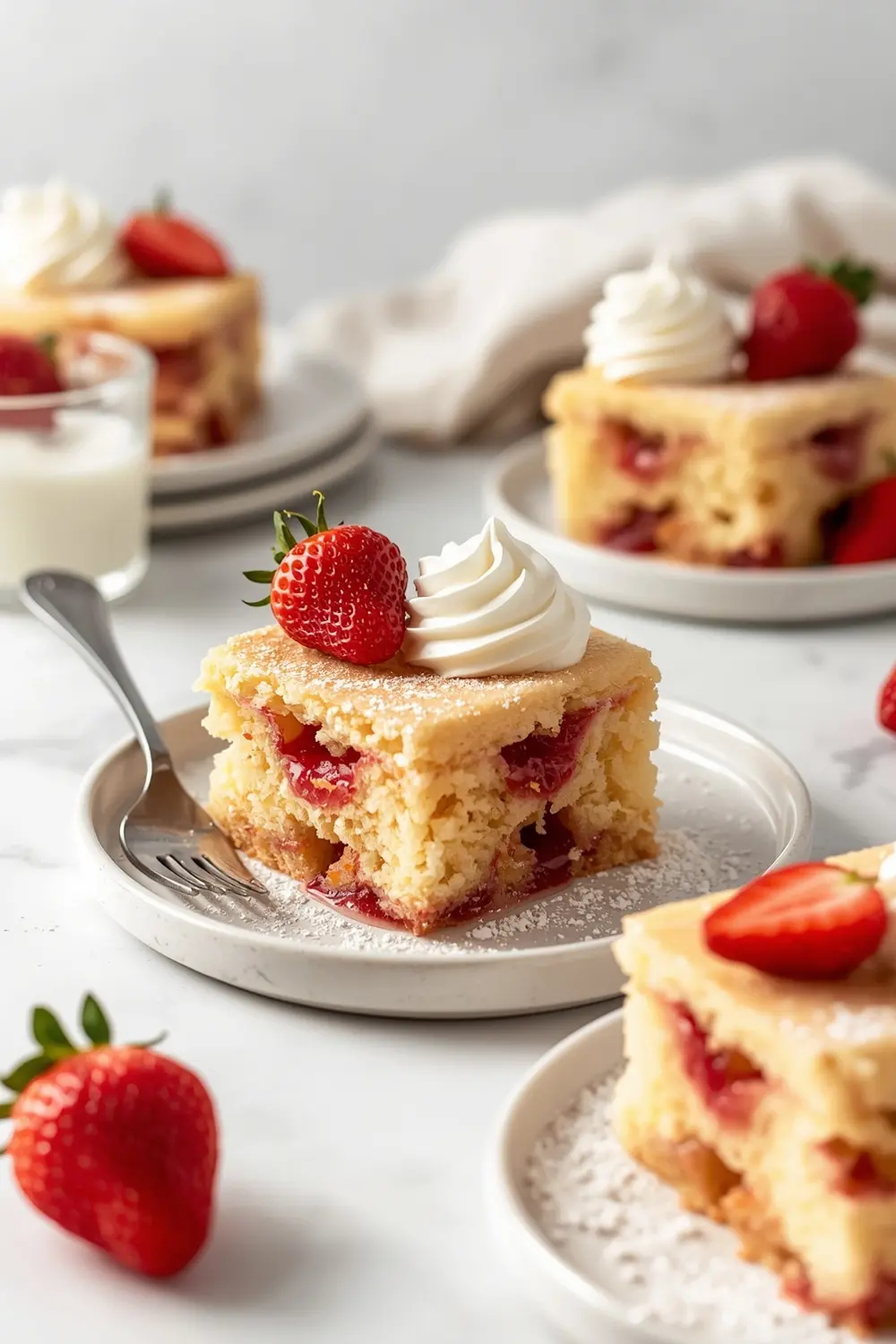
Preheat your oven to 350°F and grease a 9-by-13-inch baking pan with butter—I use my hands to coat every corner because it prevents any sticking disasters. The reason this matters: corners and edges are where cakes tend to grip the pan during cooling, which means they crack when you try to extract them.
Whisk together the 1 1/2 cups flour, 1 cup sugar, 1 tsp baking powder, and 1/4 tsp salt in a large bowl until the baking powder distributes evenly throughout. I literally count to ten while whisking to ensure no pockets of powder remain; it's a small step that prevents those random bitter spots Lily used to find.
In a separate bowl, cream the 1/2 cup softened butter with the two eggs until the mixture turns pale and nearly triples in volume—this takes about three minutes with an electric mixer. I confess I used to skip this step thinking it didn't matter, but this is where the cake gets its structure and lift; rushing means a denser, heavier cake.
Alternate adding the dry ingredients and 1 cup milk to the wet mixture, starting and ending with the dry ingredients—I do this in three additions: dry, milk, dry, milk, dry. The reason we alternate instead of dumping everything in is simple: combining wet and dry gradually prevents lumps while creating a smooth batter that bakes evenly.
Pour the batter into your prepared pan and bake for 35 to 40 minutes until a toothpick inserted in the center comes out with just two or three crumbs attached. Don't overbake; if you see no crumbs at all, you've gone too far and the final 4th of july poke cake family recipe will taste dry no matter what you do next.
While the cake cools for exactly five minutes (this timing is crucial), whisk together the 1 cup strawberry jam with the 1/2 cup gelatin mixture and 1/4 cup warm water in a small bowl until completely smooth and no lumps remain. This is where Connor watches from the kitchen counter while I work, asking about a hundred questions—and I'm always grateful because it keeps me from spacing out on timing.
Using a fork, poke holes all over the entire surface of the warm cake—roughly 100 to 120 holes depending on how generously you go. I create the holes while the cake is still warm because warm cake absorbs the filling faster and more completely than cooled cake; cold cake just sits with liquid on top.
Slowly pour the jam-gelatin mixture over the holes, distributing it evenly across the entire surface and letting it seep into the punctures as you go. This step takes patience—rushing means all the filling pools in one corner instead of hydrating the entire cake uniformly.