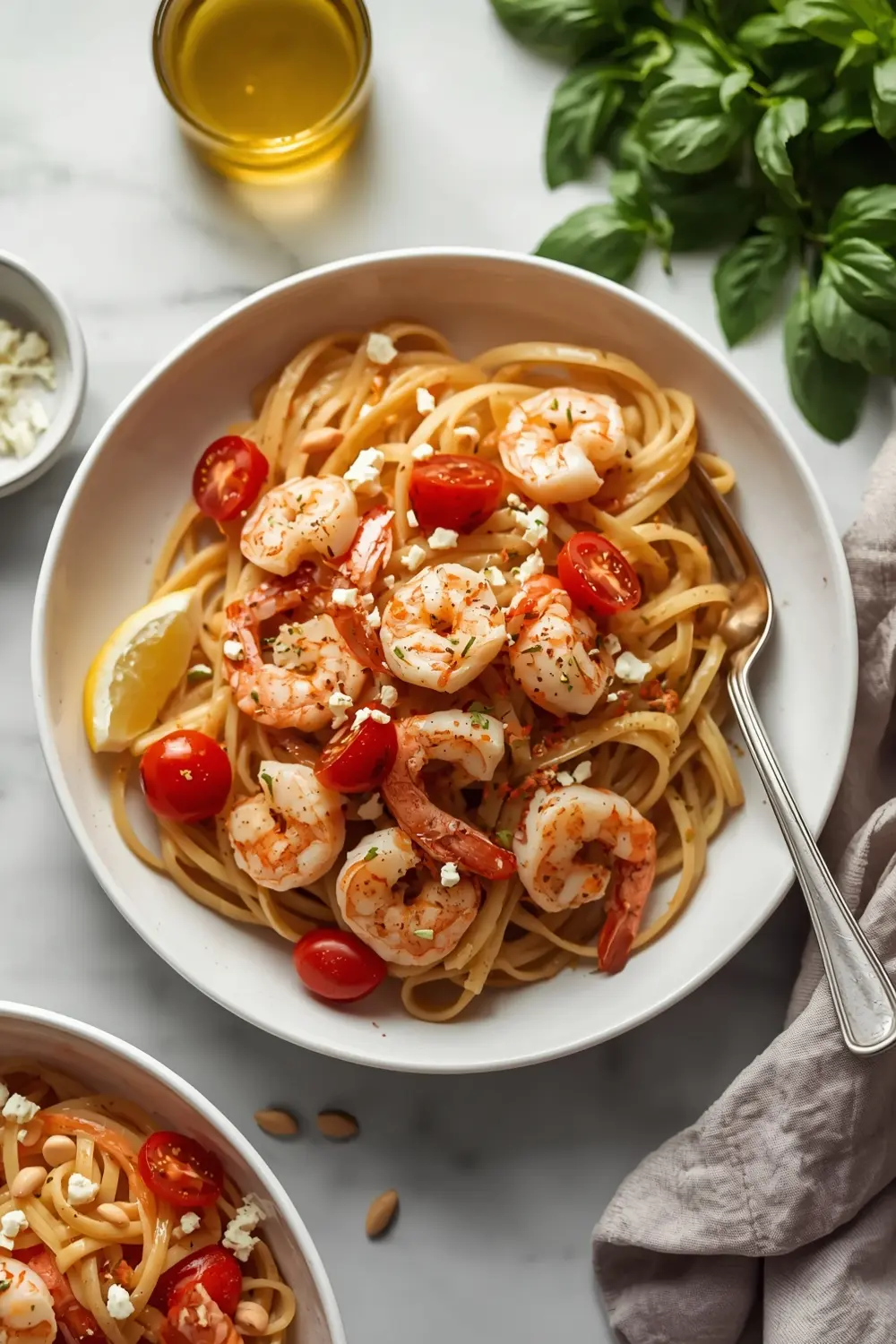
Bring a large pot of salted water to a rolling boil—you want it actively moving, not just steaming on top. I know this feels obvious, but I've watched people lower heat at this stage and regret it, because cold water turns linguine into glue. This matters because pasta needs the aggressive heat to cook evenly.
Add linguine and cook for 8-9 minutes, stirring once after two minutes so strands separate properly. Don't wander away during this window; it's when you prep the other components. Set a timer because "about 9 minutes" leads to overcooked pasta that Connor will actually notice and reject.
While pasta cooks, heat olive oil in a large skillet over medium-high heat until you see wisps of steam rising from the surface. Drop in minced garlic and cook for exactly 60 seconds—this infuses the oil without burning, which tastes bitter and ruins everything. I've made this mistake, so now I count while stirring.
Add the shrimp to the hot oil and cook for 2-3 minutes per side until they curl into tight pink rounds—this is your visual cue they're done, because overcooked shrimp turns rubbery and pulls moisture from your whole summer shrimp pasta family dish. The smell shifts from garlicky to oceanic when they're ready. I stir constantly here because it's the only way to guarantee even cooking.
Pour in fresh lemon juice and toss to coat—do not walk away for 30 seconds. The acid begins breaking down the oils slightly, creating the sauce foundation. This matters because that's your entire sauce; there's no cream waiting in the wings.
Drain pasta 1 minute before it feels perfectly done—I know this contradicts everything you've heard, but that starchy water transfer helps thicken the sauce naturally. Reserve 1/2 cup of that pasta water before you drain it; you'll need this for rescue purposes.
Toss hot pasta directly into the skillet with shrimp and lemon, adding cherry tomatoes and half the basil. Stir constantly for 1-2 minutes so the pasta absorbs the flavors and excess water evaporates slightly. If everything feels too tight or clumpy, add reserved pasta water one tablespoon at a time.
Remove from heat, fold in crumbled feta and the remaining fresh basil, then top with toasted pine nuts and red pepper flakes. This final fold matters because heat-shocked feta becomes grainy—keeping it off direct flame preserves its creamy texture.