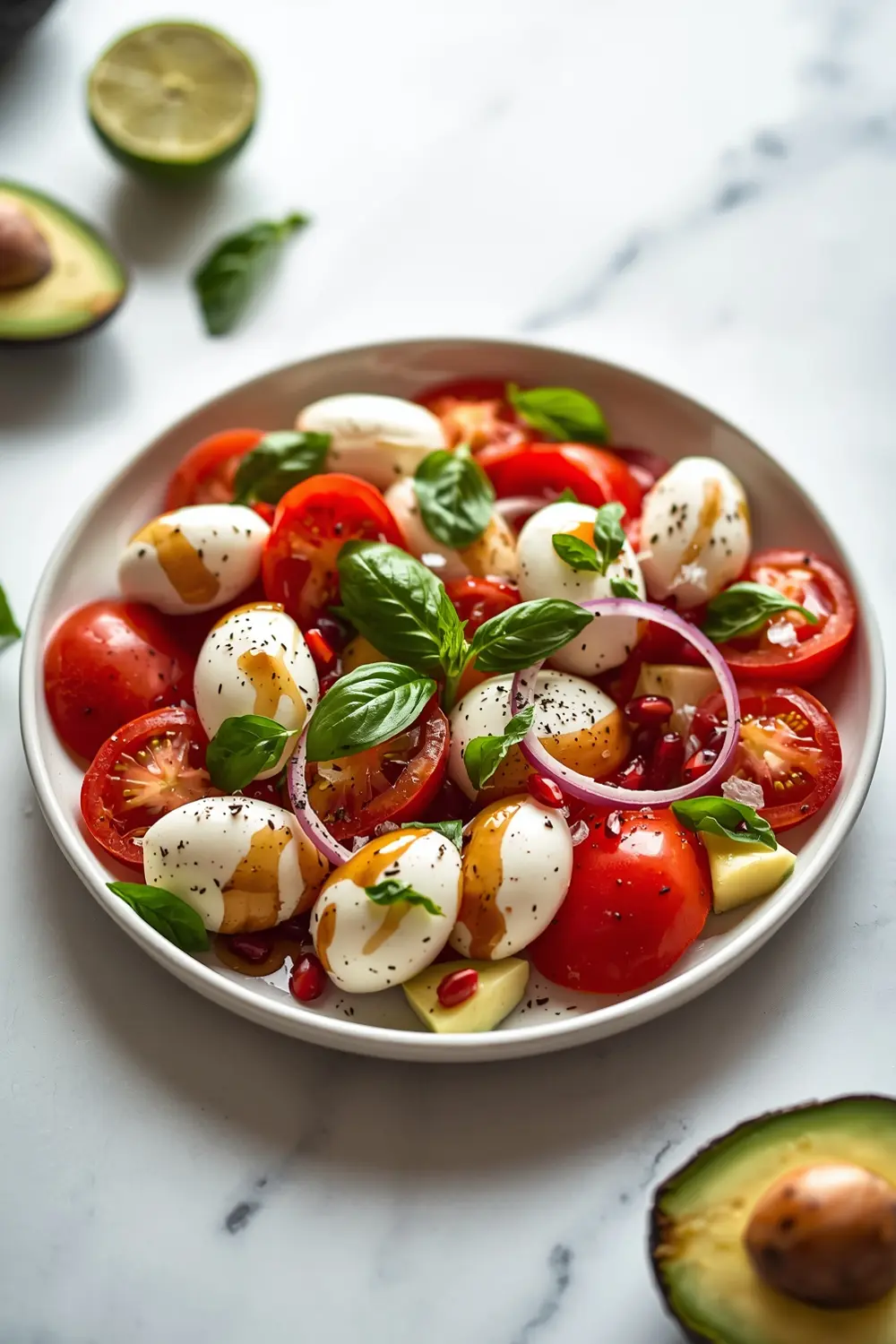
Slice your ripe tomatoes into half-inch rounds and pat them dry with paper towels—this stops excess water from pooling on the plate and diluting your dressing. I learned this the hard way after my first batch turned into tomato soup halfway through dinner.
Tear fresh basil leaves by hand rather than chopping with a knife, because torn edges bruise less and release oils more gently than sharp cuts do. The flavor stays brighter this way, which matters when you're building a summer caprese salad family recipe on simplicity alone.
Slice your mozzarella to the same thickness as your tomatoes—roughly half an inch—so each bite has equal parts cheese and fruit without one overwhelming the other. Lily actually noticed when I made them mismatched once and asked why some bites tasted "unbalanced," which proved she's paying attention.
Whisk together olive oil, balsamic vinegar, sea salt, and black pepper in a small bowl for 15 seconds until the texture looks slightly thickened. This emulsion coats every component instead of pooling at the plate's edge, because the vinegar's acidity helps bind oil and water together temporarily.
Layer tomato slice, mozzarella slice, and basil leaf on a serving platter, repeating until you've built a pattern that looks intentional rather than random. Tom actually complimented the presentation once, which never happens with salads, so there's something to the arrangement that signals "I tried."
Scatter cucumber slices, avocado chunks, red onion slivers, and pomegranate seeds across the top where guests can see them before tasting. This creates visual interest and signals to Lily that this isn't "just tomatoes," which was her worry before the first bite.
Drizzle your dressing evenly across the platter, then squeeze lemon juice over everything to brighten flavors that might taste flat without acid. I do this step last and right before serving because the lemon's volatile oils fade if they sit too long.