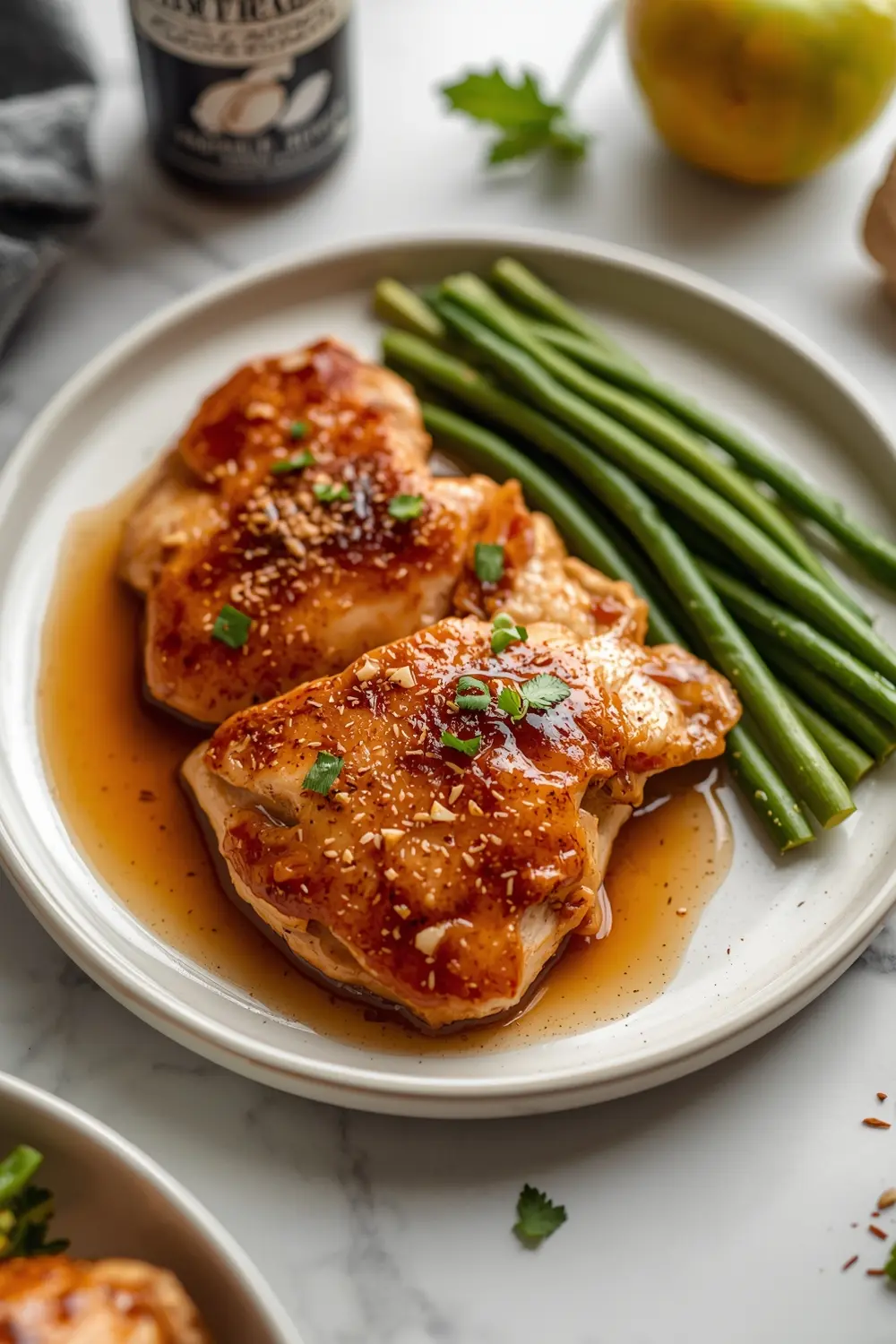
Preheat your oven to 425°F. Pat the chicken thighs completely dry with paper towels—this step matters because wet skin won't caramelize. I used to skip this and ended up with pale, rubbery skin, so trust me on the drying part.
Heat the olive oil in an oven-safe skillet over medium-high heat until it shimmers. Season both sides of the chicken with salt and black pepper. Sear the thighs skin-side down for 3–4 minutes until the skin turns golden and releases from the pan without sticking—this is where the magic starts.
Flip the chicken over and cook for another 2 minutes on the flesh side. You're not cooking it through yet; you're just building flavor. The sear locks in moisture, which is why this step prevents the dry chicken problem so many people hit.
In a small bowl, whisk together the apple cider, brown sugar, Dijon mustard, minced garlic, grated ginger, cinnamon, and coconut aminos. The mustard acts as an emulsifier, binding the glaze together instead of letting it separate. Pour this mixture around the chicken in the skillet—not over it, because you want the skin to stay exposed to direct heat.
Transfer the skillet to the oven and bake for 25–30 minutes until the chicken reaches an internal temperature of 165°F at the thickest part of the thigh. The glaze will bubble around the edges and reduce down to something that coats the chicken when you tilt the pan. If you're nervous about timing, a meat thermometer takes the guesswork completely out.
Remove from the oven and let it rest for 3 minutes before serving. This resting period allows the juices to redistribute, so every bite stays tender instead of drying out on the cutting board.