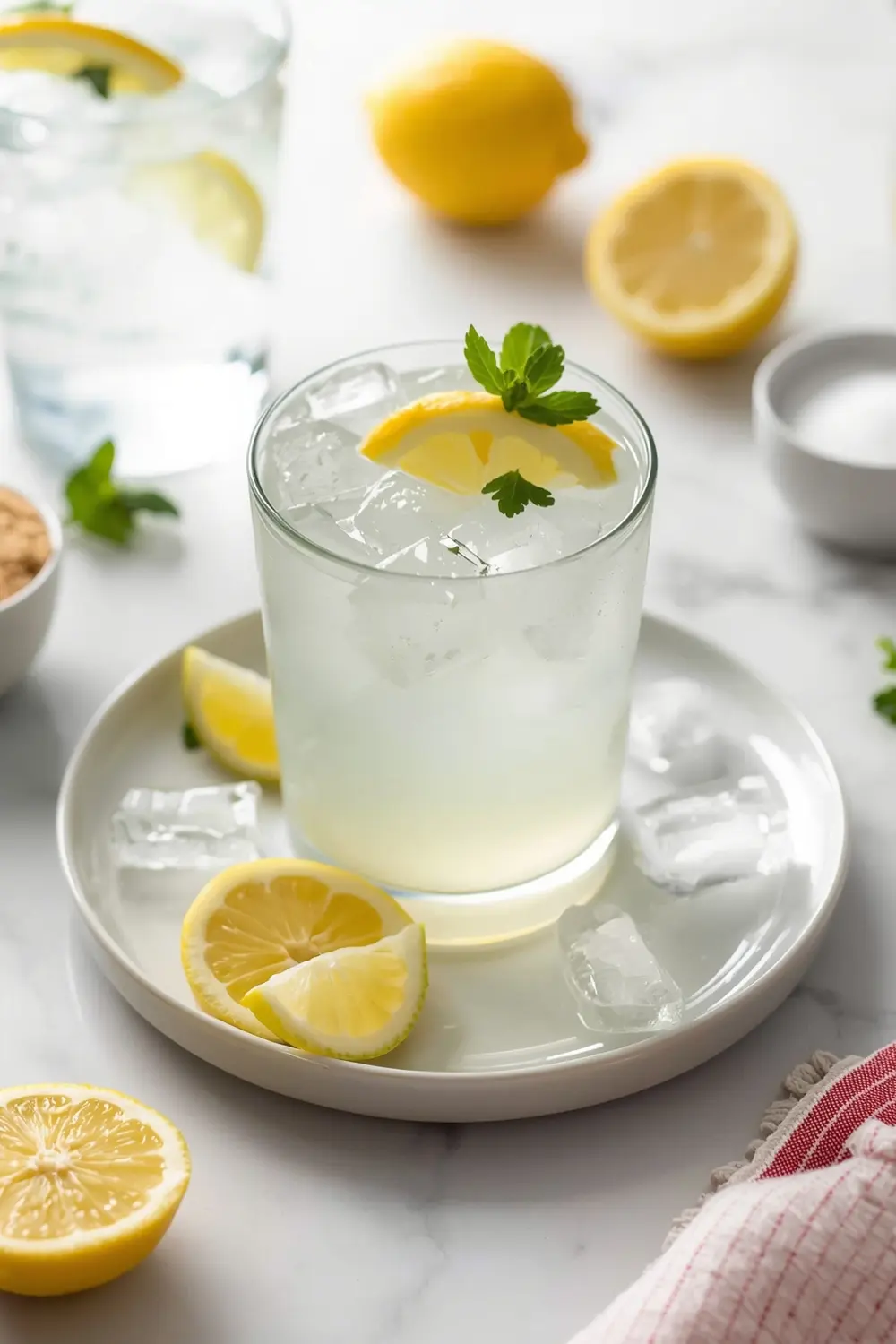
Heat 1 cup water in a small saucepan over medium until steam rises but it doesn't boil. Dissolve 1 cup granulated sugar into the hot water, stirring constantly for about 90 seconds until completely clear. This simple syrup base prevents gritty texture that occurs when cold water fails to dissolve sugar fully.
Pour the syrup into a large pitcher and let it cool for 10 minutes on the counter. I've rushed this step and regretted it—hot syrup cracks glasses and kills the citric acid's stabilizing power when you add it too soon.
Squeeze 5 lemons by hand until you have 1 cup fresh juice, straining out seeds and pulp using a fine mesh sieve. Fresh lemon juice matters here because bottled versions contain preservatives that interfere with the citric acid and cream of tartar combination. The 4th of july lemonade family recipe depends on this purity.
Add 1 teaspoon citric acid, 1/2 teaspoon cream of tartar, 1/4 teaspoon baking soda, and 1/4 teaspoon salt to the cooled syrup. Stir vigorously for 15 seconds—you'll notice slight fizzing from the baking soda reacting with the acidic mixture, and that's exactly right. This chemical reaction stabilizes the lemonade so it tastes fresh at hour five, not watered down.
Pour in 1 cup fresh lemon juice and stir thoroughly until all white powder dissolves completely. If you see chalky specks at the bottom after stirring for 30 seconds, stir another 30 seconds because undissolved cream of tartar creates bitter grittiness.
Add 13 cups cold water and stir once more—this is the moment your easy family beverage comes alive. Cold water added at the end prevents premature dilution and ensures maximum chill without watering down flavor before anyone takes a sip.
Fill a pitcher with 5 pounds ice, then pour the lemonade over ice immediately before serving. The volume of ice means every glass stays cold even as guests refill, and the timing matters because this 4th july party drink reaches its peak temperature balance within the first five minutes of service.