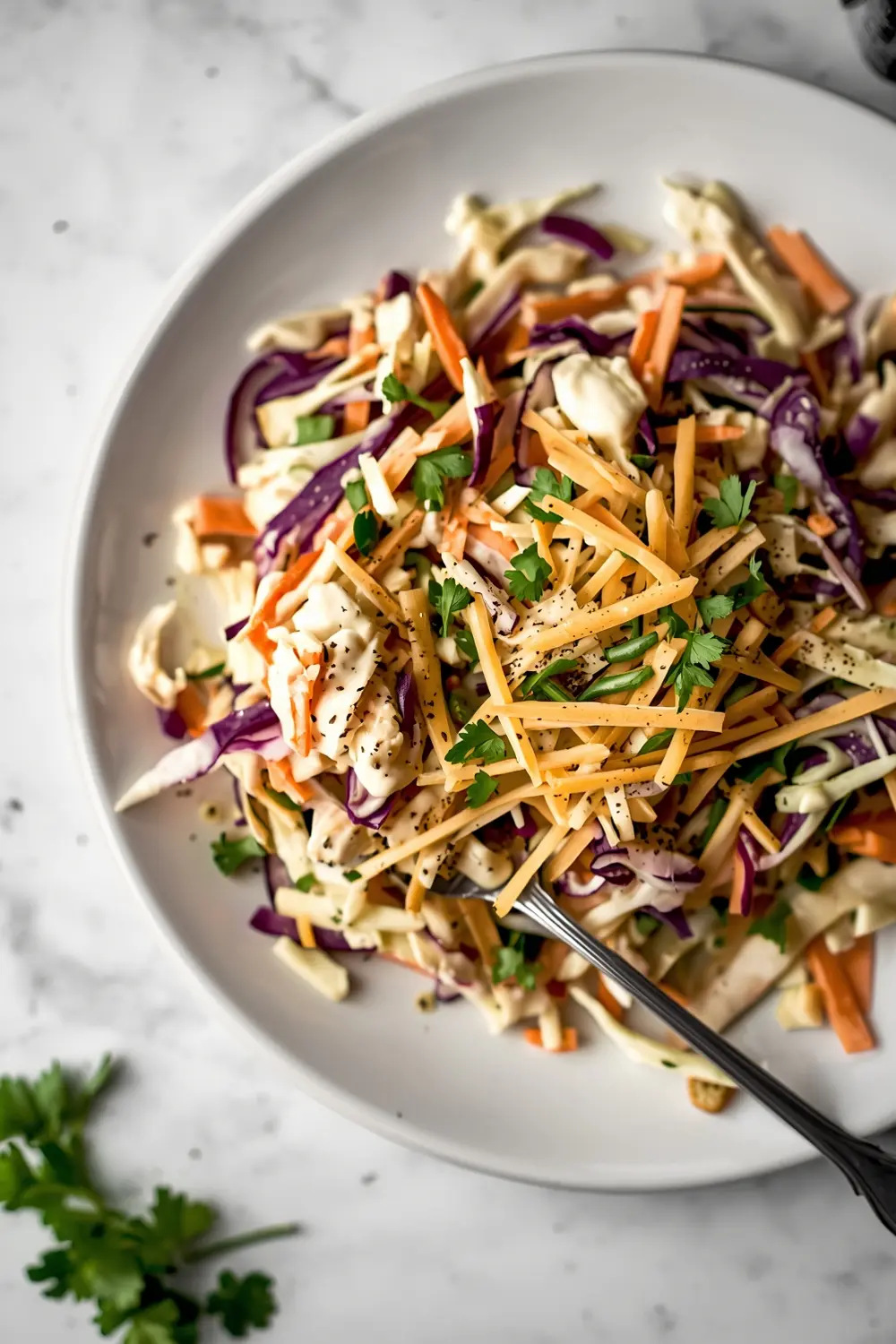
Shred your green cabbage and purple cabbage into thin, bite-sized pieces using a sharp knife or mandoline—aim for pieces you'd actually want to eat, not paper-thin ribbons that disappear. This step matters because thicker pieces hold texture longer and won't turn to paste once the dressing hits.
Grate the carrots using the large holes on your box grater, then thinly slice the red onion so each piece is about the thickness of a credit card. I use a chef's knife and let the blade do the work instead of pushing hard, because gentler cuts mean onion stays sweet instead of turning bitter.
Combine the apple cider vinegar, mayonnaise, sugar, Dijon mustard, salt, black pepper, and celery seed in a separate bowl and whisk until the dressing reaches the consistency of peanut butter. This dressing-first approach works because you're coating every vegetable evenly instead of creating pools of liquid at the bottom—most home cooks skip this step and wonder why 4th of july coleslaw family recipe ends up watery.
Place your shredded cabbage, grated carrots, and sliced red onion into a large serving bowl and pour the prepared dressing over top. Toss everything together with two wooden spoons for about one minute, making sure every piece gets coated with dressing because that's where flavor actually lives.
Let the coleslaw sit for exactly twenty minutes at room temperature—no longer, because after thirty minutes the cabbage starts releasing water and dilutes everything. Set a timer. I learned this the hard way by making batches that turned soupy by dinner, and now I'm militant about timing.
After the marination window closes, fold in the shredded cheddar cheese and chopped fresh parsley, which adds that 4th july easy side finish that makes people ask what's different. The cheese should stay visible—don't stir it into invisibility.
Taste a bite and adjust salt if needed, because cabbage varieties vary in their natural saltiness and you want to season for your specific vegetables, not a generic recipe.