Combine flour, 1/2 cup sugar, baking powder, and salt in a bowl. Cut cold unsalted butter into pea-sized pieces directly into the flour mixture. Why cold butter? It creates steam pockets that bake into tenderness rather than melting into density. Work the mixture with your fingertips until breadcrumb texture forms—this takes maybe three minutes, and honestly, I used to skip this and regretted it every time.
Add one egg and stir until the dough just comes together. Press the dough firmly into a 9-inch tart pan with a removable bottom, covering the bottom and sides evenly. This step reminds me why Lily insisted on helping—her small hands actually worked better than mine for pressing into corners without overworking the dough.
Prick the dough all over with a fork to prevent puffing. Bake at 350°F for 30 minutes until the edges turn light golden and the bottom feels set when you tap it. The fork holes let steam escape; skip them and you'll get an uneven crust that puffs like a pillow.
While the crust cools completely (about 10 minutes), whip heavy cream with 2 tablespoons powdered sugar and vanilla bean paste until soft peaks form. Don't overbeat—I've turned it to butter exactly once, and it taught me that watching the texture matters more than timing. Soft peaks mean it holds its shape but still jiggles slightly when you move the bowl.
Spread the whipped cream layer evenly across the cooled crust. This becomes your berry cushion, preventing sogginess that ruins most easy family tart attempts. The cream acts as a moisture barrier between fruit and crust—a detail most recipes skip entirely.
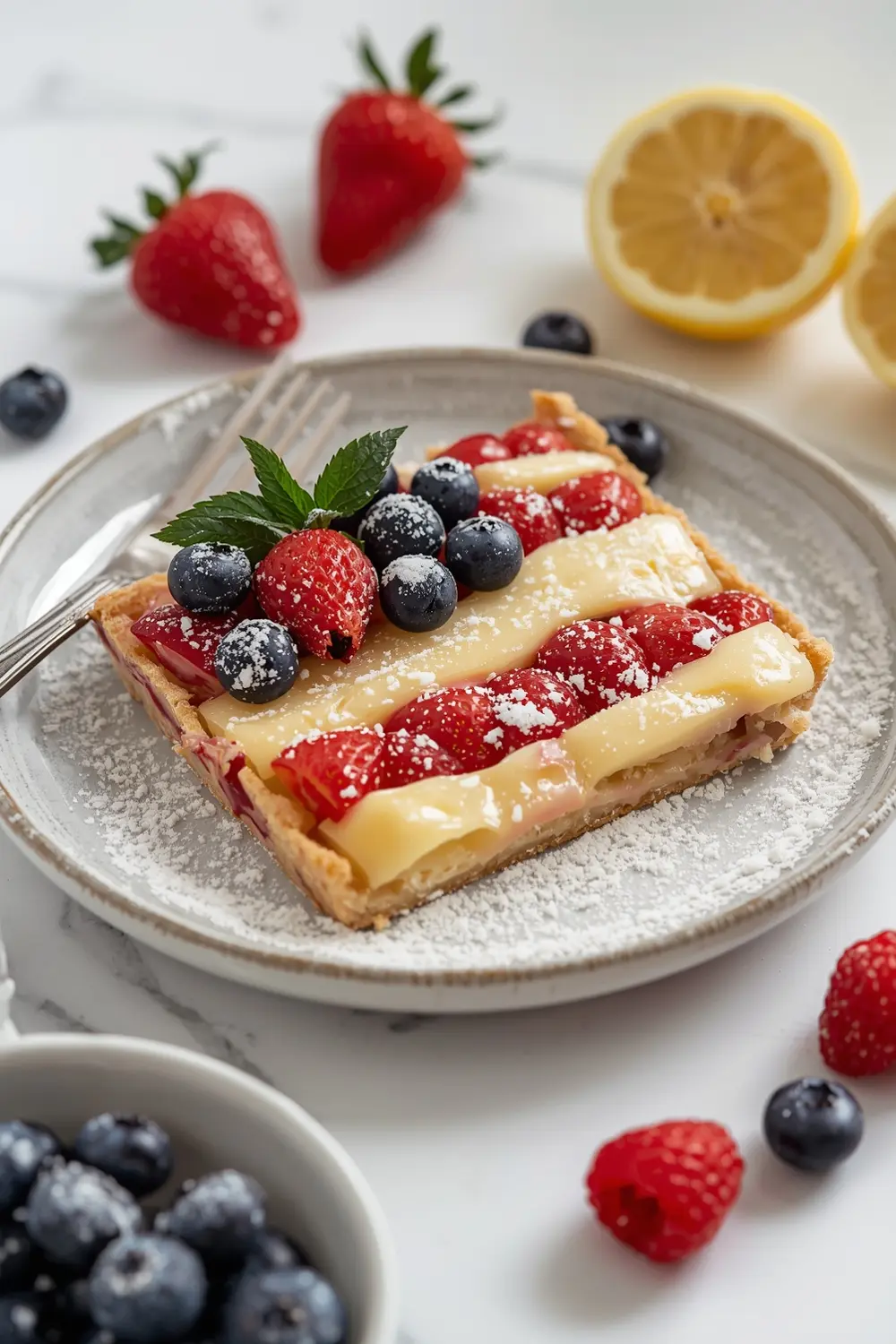
Toss strawberries, blueberries, and raspberries with 1 tablespoon lemon juice and 1 teaspoon powdered sugar. Arrange the berries in red, white, and blue stripes or concentric circles across the cream layer. Connor arranged them as a flag pattern, which took five minutes and made him feel like a pastry chef. The lemon juice prevents weeping while adding brightness that plain berries can't deliver.