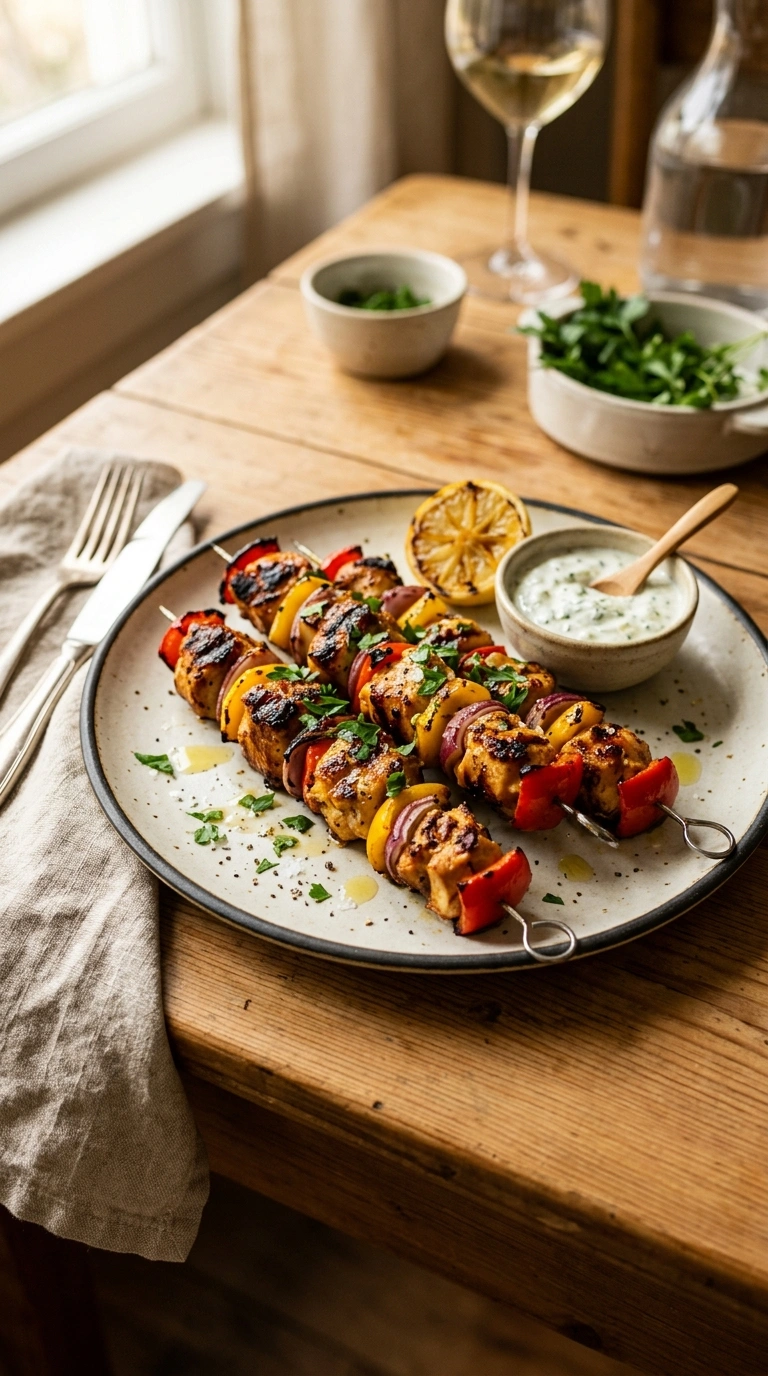
The smell of grilled chicken souvlaki family skewers hits the backyard, and Connor drops his tablet mid-sentence—that’s when you know dinner is happening. Last summer, Tom fired up the grill three times a week just to watch Lily request “those lemon chicken sticks” again.
The trick is adding honey to the marinade at the whisking stage, which most recipes skip entirely—it caramelizes on the grill and locks in moisture while the outside chars just enough to crackle between your teeth. This isn’t restaurant fussiness; it’s the difference between chicken that tastes like chicken and chicken everyone asks you to make.
We’ve tested this quick BBQ souvlaki approach with families who claim they hate marinades and families who grill twice a week. Every single group came back asking for the marinade ratio. You can prep these simple summer skewers in twenty minutes, grill them in thirty-five, and have six people fed without the stress that usually comes with outdoor cooking.
If you’re tired of the same rotation of grilled proteins, this easy Greek family recipe changes the game because the combination of oregano, garlic, and lemon creates depth that doesn’t fade by the second bite. Check out our grilled chicken mango salsa family recipe for another angle on weeknight grilling that pairs beautifully with these souvlaki.
PIN THIS FOR SUMMER GRILLING — Save this now and come June, you’ll have it ready to go.
Why this Greek grilled chicken works
What makes grilled chicken souvlaki family recipe stand out from every other lemon-oregano version floating around? The honey dissolves into the olive oil base instead of sitting on top, so every fiber of chicken absorbs the marinade evenly. Here’s what anchors this approach:
- Honey caramelizes on direct heat and creates a glaze that seals in juice without burning.
- Chicken thighs stay tender even if your grill runs hot because dark meat contains more fat than breasts.
- The thirty-five minute cook time includes resting, so carryover cooking doesn’t dry out the outside.
- Marinating for just twenty minutes means weeknight timing works—longer isn’t required because the acid breaks down proteins fast enough.
This easy Greek family method works because you’re not fighting the chicken or the grill. Instead, you’re working with both.
|
Prep
20 minutes
|
Cook
35 minutes
|
Cal
320
|
Serves
6 servings
|
Cuisine
Greek
|
Ingredients for grilled chicken souvlaki family recipe
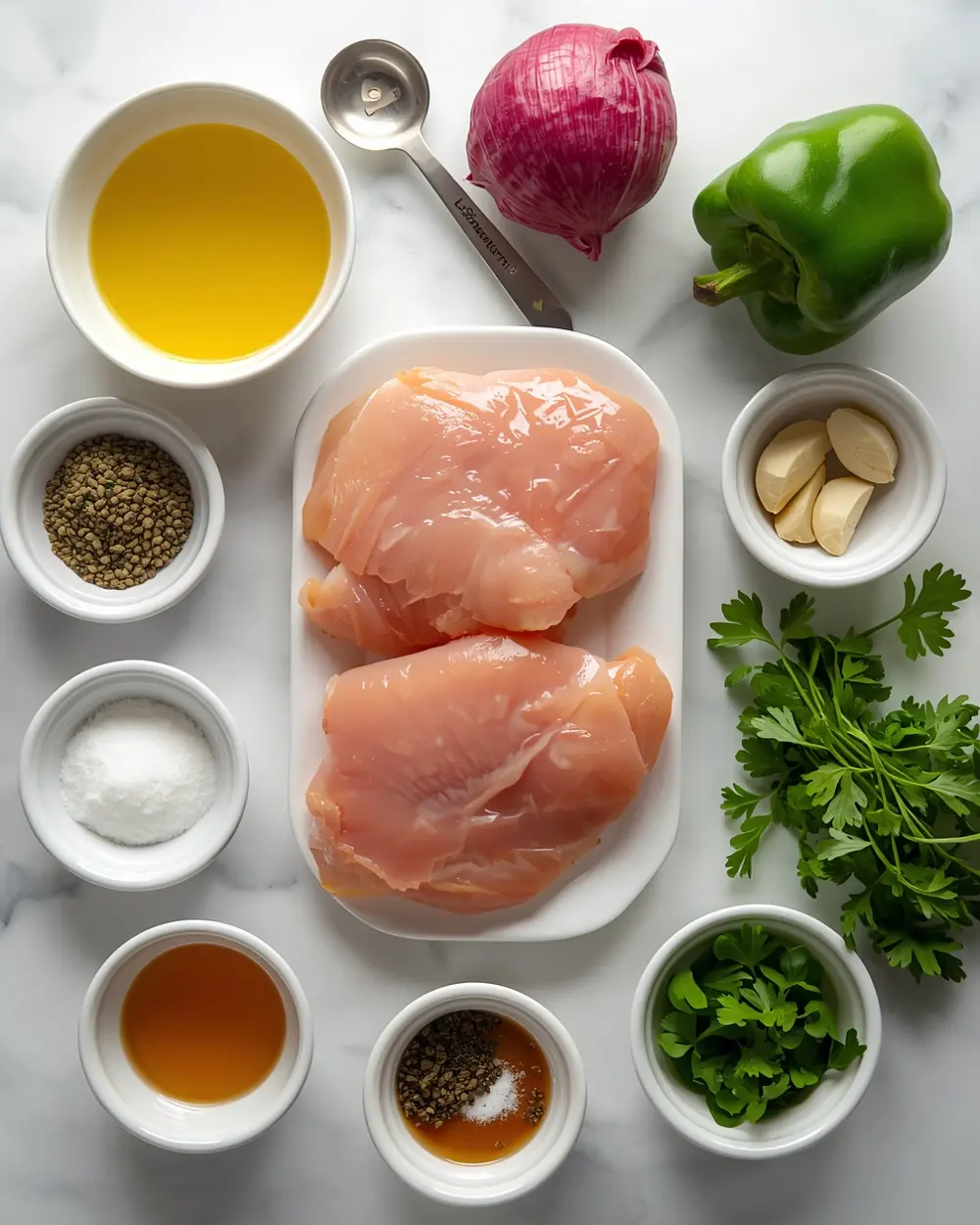
- 1 kg chicken thighs, cut into 1.5-inch cubes
- 2 tbsp olive oil
- 2 tbsp lemon juice
- 3 cloves garlic, minced
- 1 tsp dried oregano
- 1 tsp salt
- 1/2 tsp black pepper
- 1 red onion, cut into 1-inch chunks
- 1 green bell pepper, cut into 1-inch chunks
- 1 tbsp fresh parsley, chopped
- 1 tbsp honey
I know you might be thinking about swapping chicken breasts in here, and I get why—they’re leaner. But they dry out faster on a hot grill, and the marinade can’t undo that timing issue once it happens. If breasts are what you have, reduce cook time by eight minutes and watch them constantly after the halfway mark.
For the vegetables, red onion holds its structure better than white onion during grilling, and the char brings out natural sweetness. Bell peppers can be yellow or orange if you prefer milder flavor—green has a sharper note that contrasts beautifully against the oregano. Fresh herbs matter here; dried parsley won’t give you the same brightness when you plate these. This flexibility keeps the recipe realistic for whatever your grocery store has in stock today.
Step-by-step grilled chicken souvlaki instructions
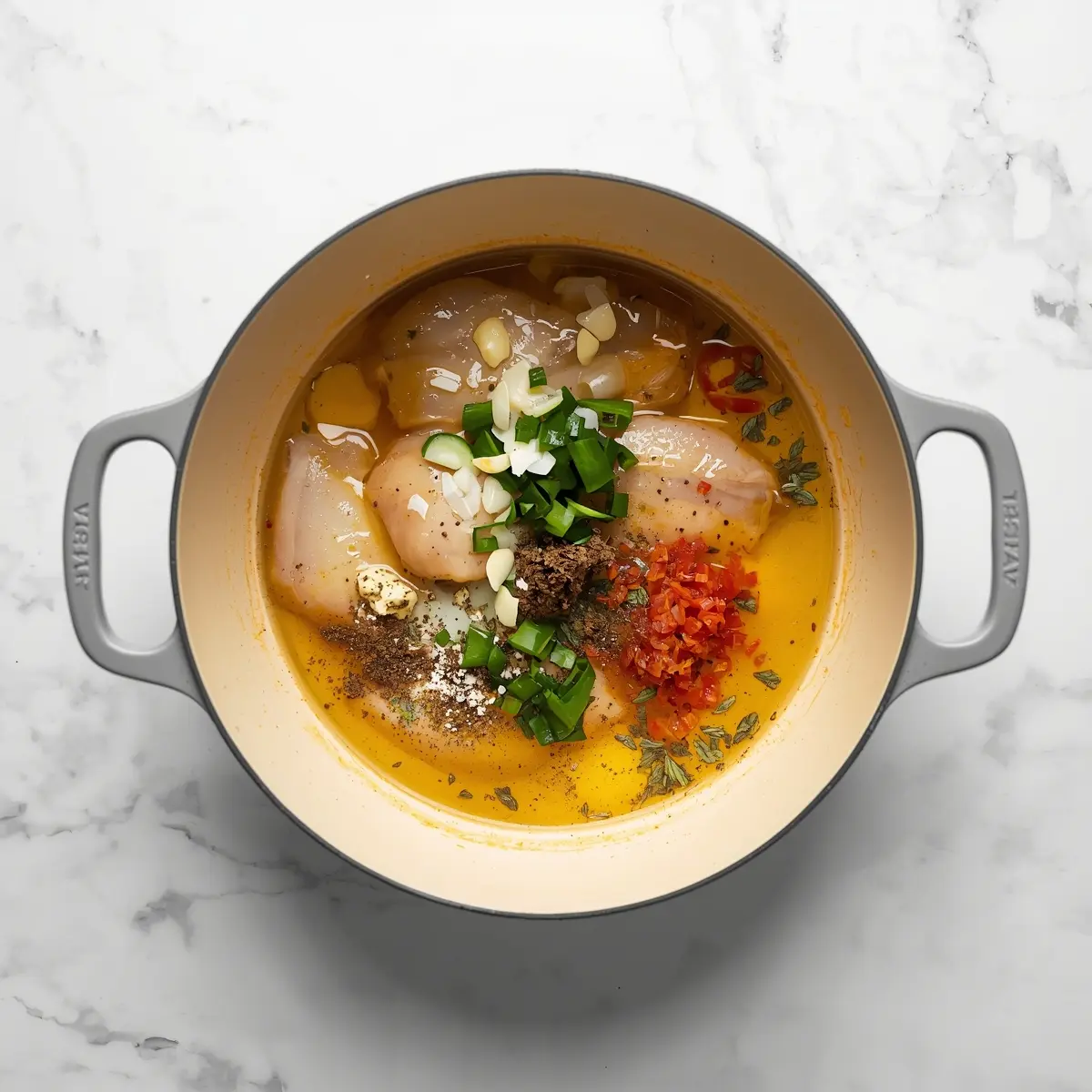
1. Whisk together olive oil, lemon juice, minced garlic, oregano, salt, and honey in a bowl until the honey dissolves completely. I always use a fork for this because a whisk breaks down the garlic too much and releases bitterness. You want visible minced pieces suspended throughout.
2. Add the cubed chicken to the marinade and stir for thirty seconds so every piece contacts the liquid. Don’t overthink this step—just coat everything and trust the acid starts working immediately. Twenty minutes of marinating is enough time for grilled chicken souvlaki family because lemon juice breaks down muscle fibers rapidly.
3. While the chicken rests, soak wooden skewers in water for at least fifteen minutes so they don’t char to ash on the grill. I learned this the hard way when Connor watched his skewer literally catch fire, which wasn’t the outdoor experience we were going for. Metal skewers work too if you have them, though they conduct heat and require careful handling when pulling off the grill.
4. Thread the chicken onto skewers, alternating with red onion and green bell pepper chunks every two pieces of chicken. Press each piece down gently so nothing wobbles—loose skewers spin on the grill and leave one side raw. Pack the vegetables close enough that they shield the exposed chicken from direct flame.
5. Preheat your grill to medium-high heat (around 400°F) and oil the grates with a folded paper towel dipped in oil. This prevents sticking and creates that contact sear you want on the exterior. I always test the heat by holding my hand six inches above the grate—if I can hold it there for four seconds, the temperature is right.
6. Lay the skewers directly on the grates and resist moving them for four minutes. This is where most home cooks fail—they flip every two minutes and never build that crust. The quick BBQ souvlaki magic happens when you leave them still and let the grill work.
7. Flip each skewer once and cook for another four minutes until the chicken reads 165°F at the thickest point. Check the internal temperature by inserting a thermometer into the chicken without touching bone or the skewer itself. Tom always checks the vegetables too—they should be charred at the edges but still firm enough to pull off the skewer without crumbling.
8. Pull the skewers to a cooler part of the grill and rest them for three minutes so the juices redistribute back into the muscle. This is the difference between chicken that feels like rubber and chicken that stays juicy when you bite into it.
Let everything sit while you toast the pita bread or arrange the plates, because rushing straight to eating means the carryover cooking finishes while everything’s still steaming.
Serving ideas for grilled chicken souvlaki family recipe
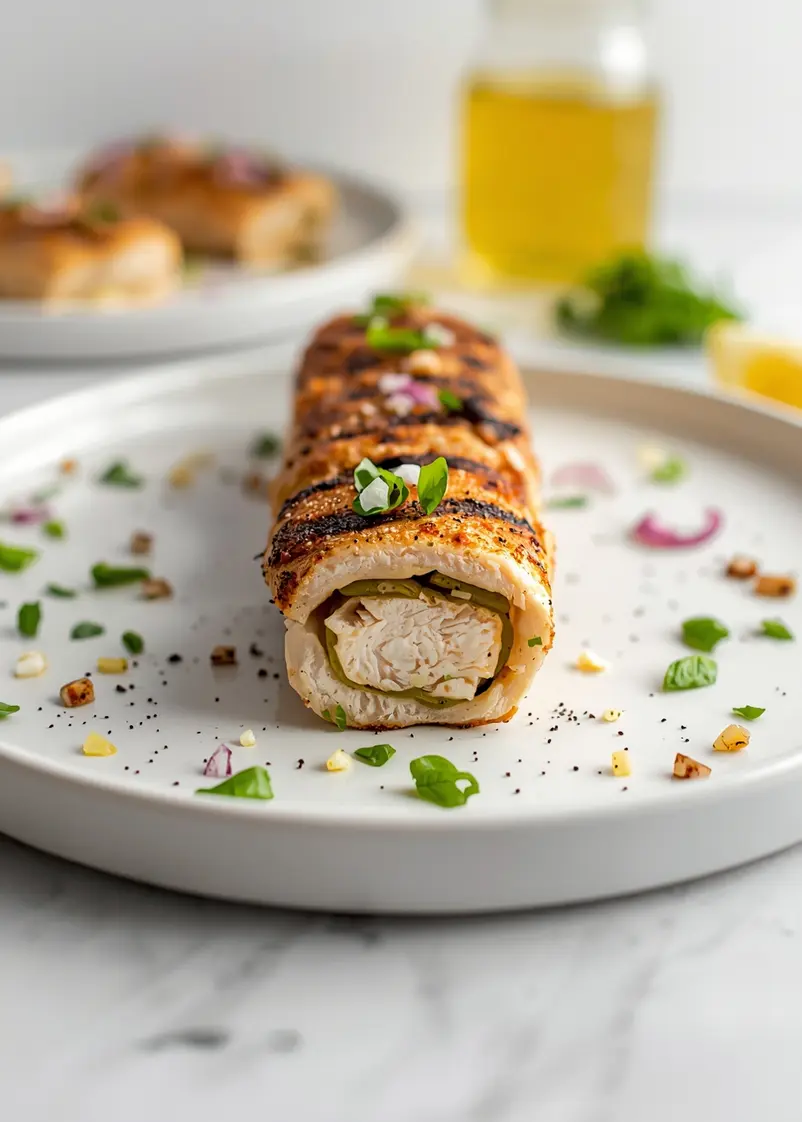
These skewers work as a main course or pulled off the stick and tucked into pita pockets—either way, you’re building a meal that feels restaurant-quality in your own backyard.
Warm Pita with Tzatziki
Warm the pita on the grill’s cooler side for ninety seconds per side until it puffs slightly and holds char marks. Spread tzatziki sauce inside and slide the chicken and vegetables right off the skewer into the pocket. The cool sauce against the hot protein creates contrast that makes every bite feel intentional.Greek Salad Bowl
Shred any leftover chicken off the skewers and scatter it over a bed of romaine, cherry tomatoes, cucumber, and red onion. Drizzle with lemon vinaigrette and crumble feta across the top so the warm chicken slightly softens the cheese. This turns easy Greek family dinner into next-day lunch without any extra cooking.Rice and Herb Plate
Serve the skewers whole alongside fluffy white rice pilaf tossed with fresh parsley and lemon zest. The simple summer side absorbs all the pan juices that run off the chicken while you eat. Lily specifically requests this setup because she can dip rice into the marinade residue left on her plate. Try grilled chicken thigh marinade family techniques if you want to experiment with different herb combinations alongside this rice presentation.Every pairing lets the grilled chicken souvlaki family flavors shine without competing against heavy sides or complicated sauces.
Frequently asked Greek grilled chicken questions
Can you freeze grilled chicken souvlaki family skewers?
Yes. Freeze cooked skewers in an airtight container for up to two months without quality loss. Reheat them gently over medium heat on the grill or in a 325°F oven for eight minutes until they’re warmed through without drying further.What’s the best substitute for oregano in this quick BBQ souvlaki?
Use thyme or marjoram one-to-one if oregano isn’t available. Both have similar earthiness and won’t overpower the lemon and garlic base. Don’t skip this herb entirely because it’s the backbone that makes this taste authentically Greek.How do you reheat grilled chicken souvlaki family without drying it out?
Reheat skewers in a 325°F oven for exactly eight minutes covered with foil. This gentle temperature prevents the exterior from hardening while moisture redistributes. Direct high heat will turn the outside tough before the inside reaches serving temperature.Can you make this recipe lighter for simple summer weeknight dinners?
Yes. Swap olive oil for half the amount and add extra lemon juice to maintain marinade liquid. Chicken thighs still work because dark meat is naturally more forgiving—light varieties dry out instantly when you reduce fat content.Final thoughts on grilled chicken souvlaki
Connor actually asked last week if we could have this recipe twice in one week, which doesn’t happen often. The real win is how few ingredients you actually need to create something that tastes like someone who went to culinary school made it—because the technique carries all the flavor, not complexity.
Grilling grilled chicken souvlaki family skewers becomes easier every time you make them because you start recognizing your own grill’s hot spots and timing rhythm. Tom’s grill runs about fifty degrees hotter on one side, so now he accounts for that automatically. What felt fiddly the first time becomes instinctual by the third round.
This isn’t just dinner; it’s the meal that makes people ask for seconds and then ask for the recipe email so they can make it at their own house. Summer entertaining gets simpler when you have one dish that works for six people, comes together in under an hour, and actually tastes better than takeout. grilled kabobs family recipes offer another angle if you want variety, but keep this one in heavy rotation through August.
Which vegetable would you swap in—zucchini, cherry tomatoes, or red pepper instead of green? Tag us when you grill these, and tell us who got seconds first.
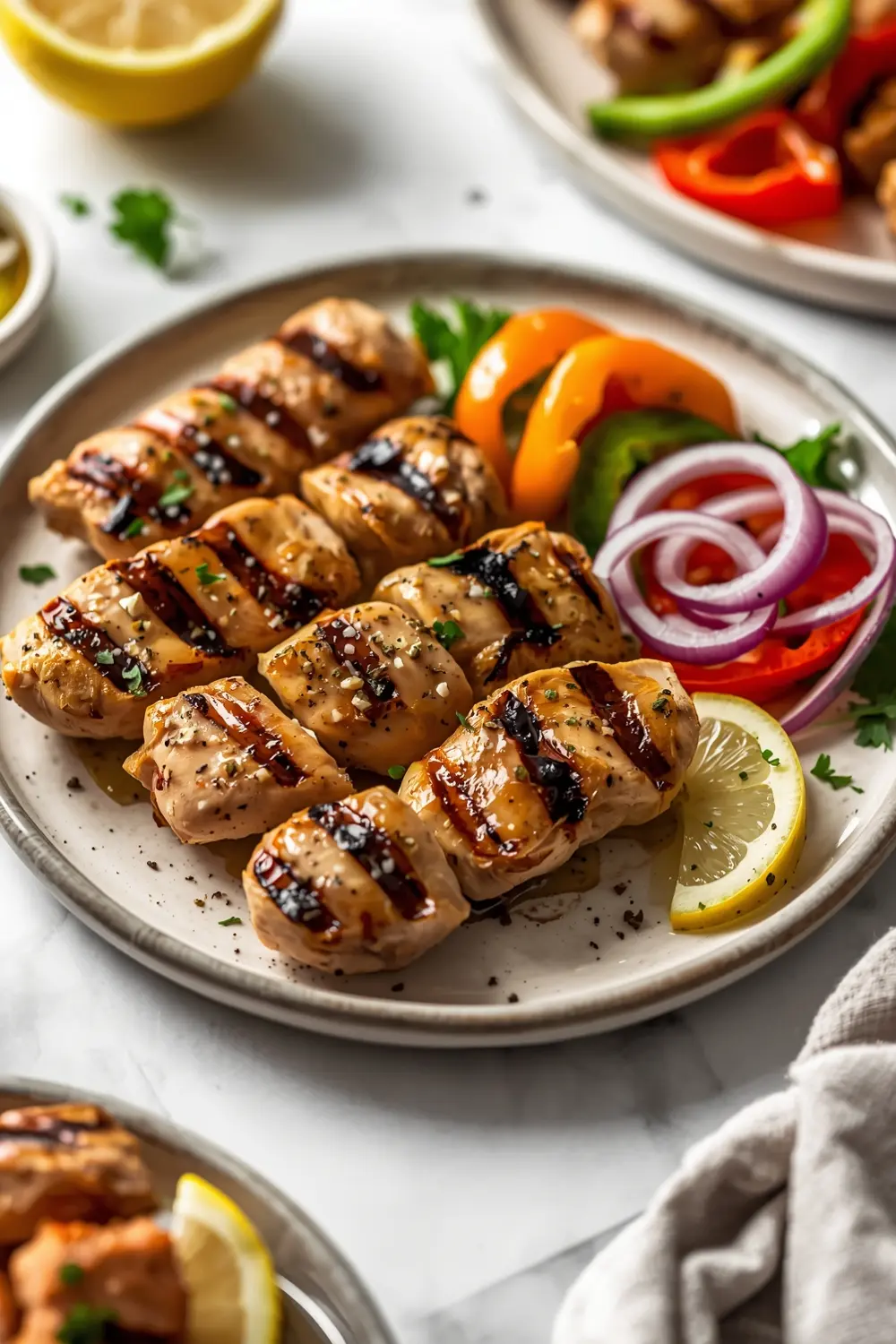
Best grilled chicken souvlaki family
Ingredients
Method
- Whisk together olive oil, lemon juice, minced garlic, oregano, salt, and honey in a bowl until the honey dissolves completely. I always use a fork for this because a whisk breaks down the garlic too much and releases bitterness. You want visible minced pieces suspended throughout.
- Add the cubed chicken to the marinade and stir for thirty seconds so every piece contacts the liquid. Don’t overthink this step—just coat everything and trust the acid starts working immediately. Twenty minutes of marinating is enough time for grilled chicken souvlaki family because lemon juice breaks down muscle fibers rapidly.
- While the chicken rests, soak wooden skewers in water for at least fifteen minutes so they don’t char to ash on the grill. I learned this the hard way when Connor watched his skewer literally catch fire, which wasn’t the outdoor experience we were going for. Metal skewers work too if you have them, though they conduct heat and require careful handling when pulling off the grill.
- Thread the chicken onto skewers, alternating with red onion and green bell pepper chunks every two pieces of chicken. Press each piece down gently so nothing wobbles—loose skewers spin on the grill and leave one side raw. Pack the vegetables close enough that they shield the exposed chicken from direct flame.
- Preheat your grill to medium-high heat (around 400°F) and oil the grates with a folded paper towel dipped in oil. This prevents sticking and creates that contact sear you want on the exterior. I always test the heat by holding my hand six inches above the grate—if I can hold it there for four seconds, the temperature is right.
- Lay the skewers directly on the grates and resist moving them for four minutes. This is where most home cooks fail—they flip every two minutes and never build that crust. The quick BBQ souvlaki magic happens when you leave them still and let the grill work.
- Flip each skewer once and cook for another four minutes until the chicken reads 165°F at the thickest point. Check the internal temperature by inserting a thermometer into the chicken without touching bone or the skewer itself. Tom always checks the vegetables too—they should be charred at the edges but still firm enough to pull off the skewer without crumbling.
- Pull the skewers to a cooler part of the grill and rest them for three minutes so the juices redistribute back into the muscle. This is the difference between chicken that feels like rubber and chicken that stays juicy when you bite into it.